Discover
FBE

Our Vision

To be internationally acknowledged leader of education for professional excellence in Built Environment practice, culture and heritage.

Our Mission

To generate, disseminate and apply knowledge strategically and innovatively to enhance the quality of the nation's Built Environment practice, culture and heritage, and the prosperity of its people.

Facts & Figures

As of June 2026

0
Academic Staff
0
Academic Programmes
0
Active Students
0
Total Alumni

A World We Build.
Together.

The term ‘Built Environment’ (or Alam Bina in Malay) refers to an interdisciplinary field concerned with the design, construction, and management of the human-made environment. Although the expression only came into use in the 1980s, the concept itself is as ancient as humanity, dating back to the earliest stone tools, clothing, and cooperative communities. It encompasses all human creations—past, present, and future—and provides the setting for daily life, from buildings and parks to entire cities. The Built Environment is not typically regarded as a single profession in its own right; for instance, one would not normally describe a practitioner as a ‘Built Environmentalist’. Instead, the field is represented by a range of professions, including architects, quantity surveyors, interior designers, town planners, and landscape architects. The Faculty of Built Environment at UNIMAS was established with the aim of producing capable professionals to contribute to this diverse and evolving field.

Our Story

The Faculty of Built Environment UNIMAS was founded in response to the growing need for specialised education and research that address the unique environmental, cultural, and developmental challenges of Sarawak and the wider Borneo region. Rooted in the aspiration to shape sustainable, context-sensitive built environments, the faculty emerged from a convergence of disciplines—architecture, quantity surveying, and related fields—integrated to produce graduates capable of balancing rapid urbanisation with ecological stewardship and local heritage. Since its inception, the faculty has steadily evolved into a vibrant academic community, strengthening its curriculum, expanding industry and community engagement, and contributing to regional development through research and design innovation.

Before 2016

Initiation


The proposal to establish Built Environment programmes at UNIMAS was first put forward, and considerable effort was devoted to bringing this vision to fruition.

Before 2016

September 2017

Architecture First Cohort/ Under Faculty of Engineering


Architecture was initially introduced as a programme, with teaching and studio-based learning conducted under the Faculty of Engineering. The inaugural cohort of 20 students enrolled during the 2017/2018 academic session. To oversee the programme, the Department of Architecture was subsequently established, under the leadership of Prof. Ar. Nurakmal Abdullah Goh.

September 2018

Quantity Surveying First Cohort


A cohort of 16 Quantity Surveying students enrolled in the programme during the 2018/2019 academic session, marking its first intake.

September 2018

22 September 2018

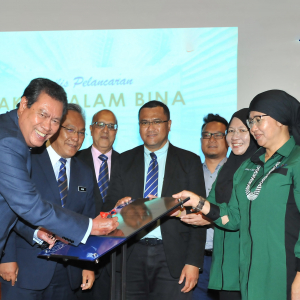
Faculty of Built Environment Established

Avatar


Both departments were subsequently placed under the newly established Faculty of Built Environment, the tenth faculty at UNIMAS. Although teaching and studio activities continued to be conducted within the Faculty of Engineering, the administrative operations of the new faculty were temporarily based at The Cube — Central UNIMAS Building for Educators — which was inaugurated on the same day. 

11 November 2019

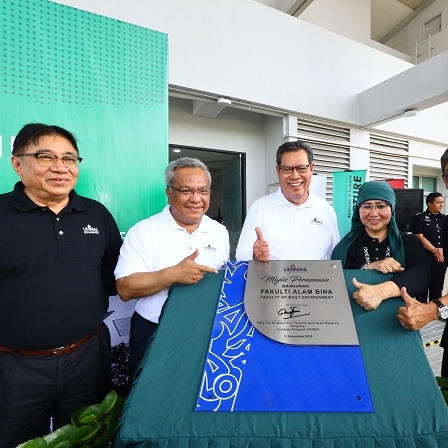
New Building Launched


The Faculty later relocated to the newly refurbished premises, formerly the FRST external laboratory complex. All operations, including state-of-the-art teaching and learning facilities, were transferred to this building. The official opening was conducted by the UNIMAS Chairman, Tan Sri Datuk Seri Panglima Sulong bin Matjeraie, at precisely 11:11 a.m.

11 November 2019

November 2022

Quantity Surveying Programme Accredited

The Bachelor in Quantity Surveying with Honours programme was granted accreditation by the Board of Quantity Surveyors Malaysia, effective from November 2022 until October 2025. Following subsequent evaluations, the accreditation was successfully renewed, extending its full five-years validity until 2031.

October 2021

Architecture Programme Accredited
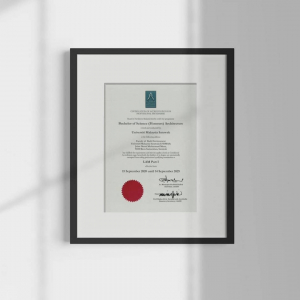

The Bachelor of Science (Honours) Architecture programme was awarded its first full Part I accreditation by the Lembaga Arkitek Malaysia, effective from September 2020 to September 2025. Following a subsequent accreditation review, the programme successfully secured renewal, extending its full five-year validity until 2030.

October 2021

January 2024

Master of Science Construction Design Management Programme Received Full MQA Accreditation

The Master of Science Construction Design Management programme has been awarded the Certification of Full Malaysian Qualifications Agency (MQA) Accreditation effective on the 12th of January 2024.

The Building

Situated between the main campus and the historic East Campus of UNIMAS along Jalan Belian, the Faculty of Built Environment (FBE) building occupies a truly central position at the heart of the university. It has become a distinctive site where many emerging talents in the field of Built Environment have been nurtured, uniquely set apart from the bustle of the main campus and poised to serve as a strategic link between the two campuses.  Originally functioning as the External Laboratory for the Faculty of Resource Sciences and Technology (FRST) until 2018, the building was transformed through renovation in 2019 into the FBE. Remnants of its earlier identity as a laboratory remain visible, endowing the structure with a singular charm. Its design embodies a distinctly Bornean character, raised elegantly ‘on stilts’. The architecture plays with form, introducing permeability through four courtyards that act as “voids” or “air wells” within the otherwise solid mass. As a low-rise structure, it facilitates seamless movement between blocks and courtyards, reinforcing a sense of openness and connectivity.

The building presents a strikingly symmetrical layout, its architecture exuding an idealised formality that conveys the presence of an institutional entity, almost reminiscent of the attributes of a living organism. Its sections are aptly designated Wing A and Wing B (on the eastern side), and the overall structure bears a strong likeness to a bird, with the foyer’s iconic form evoking a beak — though some interpret it as a vessel, leaving much to the imagination of the beholder. The faculty itself stands out as truly distinctive.

Facilities

The Faculty is outfitted with modern, state-of-the-art equipment, it provides advanced resources for the undergraduate and postgraduate programmes. Essential amenities such as studios, classrooms, student lounge, parking spaces and vending machines are already in place, with further additions of new spaces expected to be completed soon, creating a fully integrated complex. This expansion is set to drive the faculty towards greater refinement, marking it as a dynamic and steadily growing institution.

Architecture Studio 1

Capacity: 50 pax

Architecture Studio 2 & 3

Capacity: 90 pax (Combined)
Architecture Studio 2: 45 pax
Architecture Studio 3: 45 pax

Architecture Studio 4

Capacity: 50 pax

Architecture Studio 5

Capacity: 50 pax

Hybrid Classroom

Capacity: 20 pax

Seminar Room 2

Capacity: 25 pax

Seminar Room 3

Capacity: 25 pax

Seminar Room 4

Capacity: 25 pax

Student Society Office

Capacity: 25 pax

QS Computer Lab

Capacity: 70 pax

Architecture Computer Lab

Capacity: 41 pax

Postgraduate Room

Capacity: 8 pax

Outdoor Gallery

An outdoor terrace gallery for informal critiques, presentations, and spillover from the main exhibition.

Musolla

Capacity: 20 pax

QS Archive

UNIMAS Innotech Hub

The UNIMAS Innovation Technology Hub is a one-stop centre for education–industry collaboration, showcasing innovations, nurturing partnerships, and accelerating commercialisation.

The Pier

The pier is a unique feature that offers scenic views of the river and surrounding jungle, providing a relaxing spot to unwind and socialize.

Foyer

The primary open area for faculty events, social gatherings, waiting zone, and as a central node.

Administrative & Management Office

The main administrative office of the faculty, where management and administrative staff operated from.

QS Studio 3

Capacity: 70 pax

QS Studio 4

Capacity: 50 pax

Architecture Archive

Capacity:

Architecture Gallery

Capacity: 50 pax

Printing Laboratory

Capacity: 30 pax

Graphic Room

Capacity: 40 pax

Building Technology Workshop

Capacity: 50 pax

QS Studio 1

Capacity: 50 pax

Resource Centre

Capacity: 70 pax

QS Studio 4

Capacity: 50 pax

Digital Lab

Capacity:

Lecturers' Room

The lecturers’ room extends across both building wings, allowing easy and direct access for students.

Our Location

Faculty of Built Environment | Fakulti Alam Bina 
Universiti Malaysia Sarawak, 
94300 Kota Samarahan, Sarawak, Malaysia 

Tel: +6 082-581890

Image

Faculty of Built Environment  |   Fakulti Alam Bina

Universiti Malaysia Sarawak,

94300, Kota Samarahan,

Sarawak, Malaysia


Tel: +6 082-581890