Undergraduate
Programmes
Facts & Figures
As of August 2026
Programmes
Undergraduate Students
Bachelor of Science (Hons) Architecture
Our Architecture programme has been awarded Full Part I Accreditation by the Board of Architects Malaysia (Lembaga Arkitek Malaysia). Grounded in the unique material, cultural, and ecological contexts of Sarawak, the programme nurtures innovative and holistic approaches to the built environment.
As the world confronts challenges such as climate change, biodiversity loss, urban poverty, and rural transformation, the programme promotes a sustainable architectural ethos that is shaped by the indigenous knowledge, cultural heritage, and natural landscapes of the region. By integrating global perspectives with local realities, students are equipped to create resilient and meaningful built environments that are both internationally relevant and distinctly Sarawakian in character.
What is Architecture?
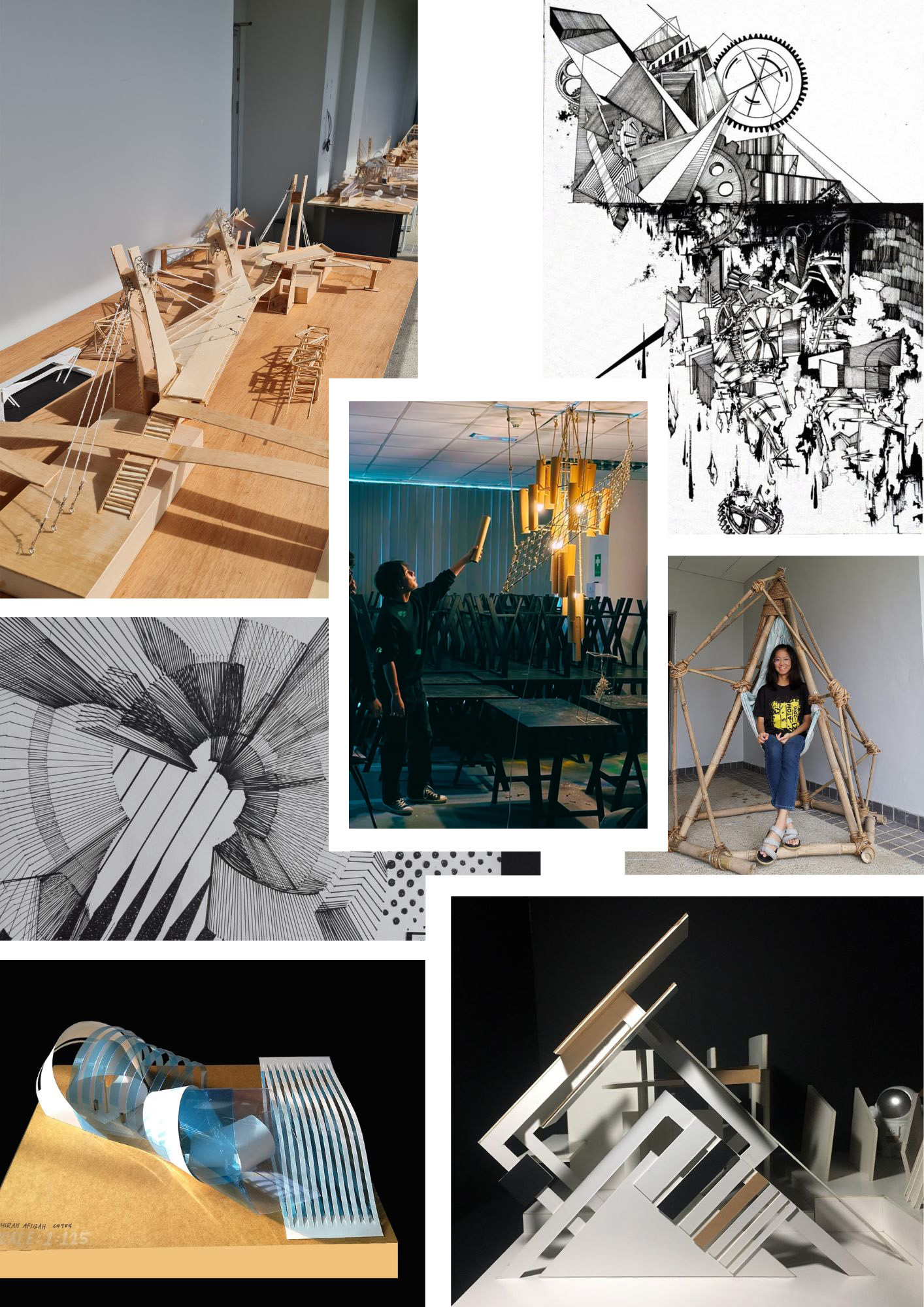
Architecture (or Seni Bina in Malay), in the simplest definition is described as the art and science of designing buildings and structures. It is an expression of shapes, forms, space and light to change our environment creatively. Architects design creative structures and spaces while ensuring designs are beautiful, safe, functional and realistic. Architects involve in designing process include ideation, studies, drawing, drafting, model-making etc. The role carries with it obligations and responsibilities of creating a better environment for people and other beings. Architects work closely with other consultants, making sure that construction is according to drawings, quality and specifications. Architects' works involve space and place making, buildings, environment, structures, infrastructures, objects and most importantly, people.

Desgined by Kelvin Lee Kian Shie, Cohort 3.
About the Programme
Philosophy
Architecture as an integrative discipline drawing upon technical, social, and economic knowledge to transform the way humanity inhabits the earth in the creation of a pleasing and sustainable built environment in which to dwell.
Vision
To set forth an Architecture programme at UNIMAS that draws upon the special material, cultural and ecological circumstances of our locality to pioneer holistic approaches to the built environment. Faced with global issues of climate change, habitat and species loss, urban poverty and rural transformation, architecture needs to embrace a sustainability that is informed by indigeneity of people, culture and land to create a lasting, flourishing built environment that is global in outlook and uniquely Sarawakian in practice.
Mission
To produce versatile and responsible graduates with honest, ethical and creative minds in promoting Architecture for humanity and the advancement of knowledge.
Programme Delivery
Within the studio, students engage in problem-based design projects that challenge them to develop architectural solutions and communicate their ideas through evidence-based outputs such as drawings, models, and other design representations. Studio learning encompasses a wide range of activities, including lectures, site analyses, guest talks, discussions, critique sessions, portfolio reviews, exhibitions, field-based learning experiences, and presentations. The outcomes of studio work may take various forms, such as presentation boards, animations, physical and digital models, reports, sketches, renderings, and other design documentation that demonstrate the students’ learning and creative development.
Career Pathway to become a Profesional Architect
The title “Ar.”, pronounced Architect, is a prestigious professional designation used before the name of a registered architect. It signifies that the holder has fulfilled the academic, practical and professional requirements necessary to practise architecture and is recognised by the Board of Architects Malaysia (Lembaga Arkitek Malaysia, LAM).
Attaining the title requires completion of a rigorous educational and professional pathway established by LAM. This journey includes obtaining qualifications from accredited LAM Part I and LAM Part II programmes, followed by the successful completion of the LAM Part III Professional Examination, which assesses professional competence and readiness for practice.
As the title “Architect” is protected under the Architects Act 1967, only individuals registered with Lembaga Arkitek Malaysia are legally entitled to use it. This ensures that the profession maintains the highest standards of competency, ethics and public responsibility.
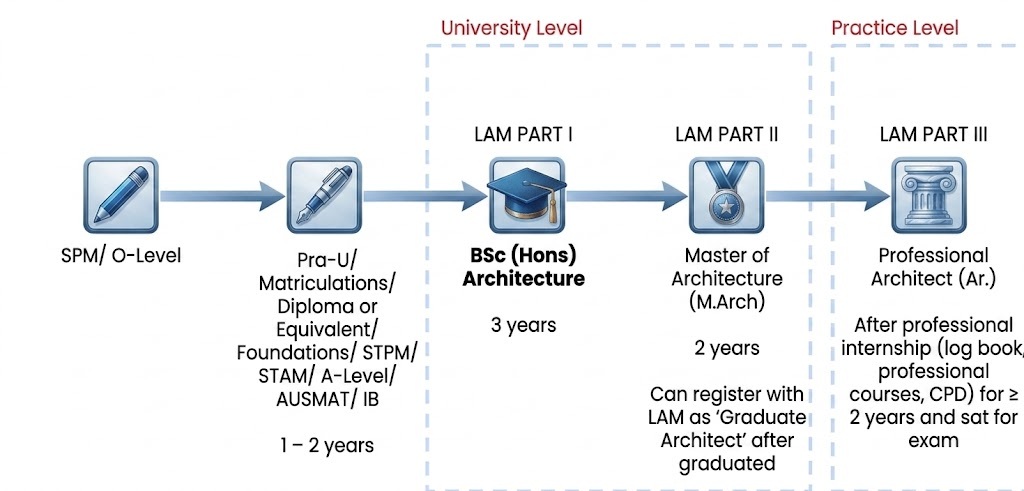
At UNIMAS, the pathway towards professional architectural registration begins with the LAM Part I accredited Bachelor of Science (Hons) in Architecture programme. Built upon strong foundations in design, technology, sustainability and professional practice, the programme nurtures future architects equipped to contribute meaningfully to the built environment while progressing towards professional recognition in the field.
Courses
DESIGN
Architecture Design Studio 1 - 6
COMMUNICATION
Architectural Drawing
Graphic Communication
Computer Aided Architectural Drafting
Digital Architecture 1 & 2
CULTURAL CONTEXT
History of Architecture 1 & 2
Architecture and Form
Human Settlement
MANAGEMENT PRACTICE & LAW
Professional Internship
Architectural Law and Practice
TECHNOLOGY & ENVIRONMENT
Environmental Physics
Building Technology 1 - 3
Survey of Architectural Structure
Building Services 1 & 2
Structure Analysis
Architecture and Ecology
Green Architecture
Landscape Design

"What makes the programme truly distinctive is its emphasis on critical and creative thinking, drawing inspiration from indigenous knowledge, vernacular architecture and the cultural diversity of Borneo. Students are encouraged to explore innovative design solutions that respond to contemporary challenges while respecting local contexts, communities and environments."
Zayn Al-Abideen Gregory
Programme Coordinator
BSc (Hons) Architecture
Bachelor in Quantity Surveying with Honours
The Bachelor in Quantity Surveying with Honours at UNIMAS is fully accredited by the Board of Quantity Surveyors Malaysia. The programme aims to produce competent, high-calibre quantity surveyors equipped to meet the technical demands of the construction industry and compete in both local and international markets.
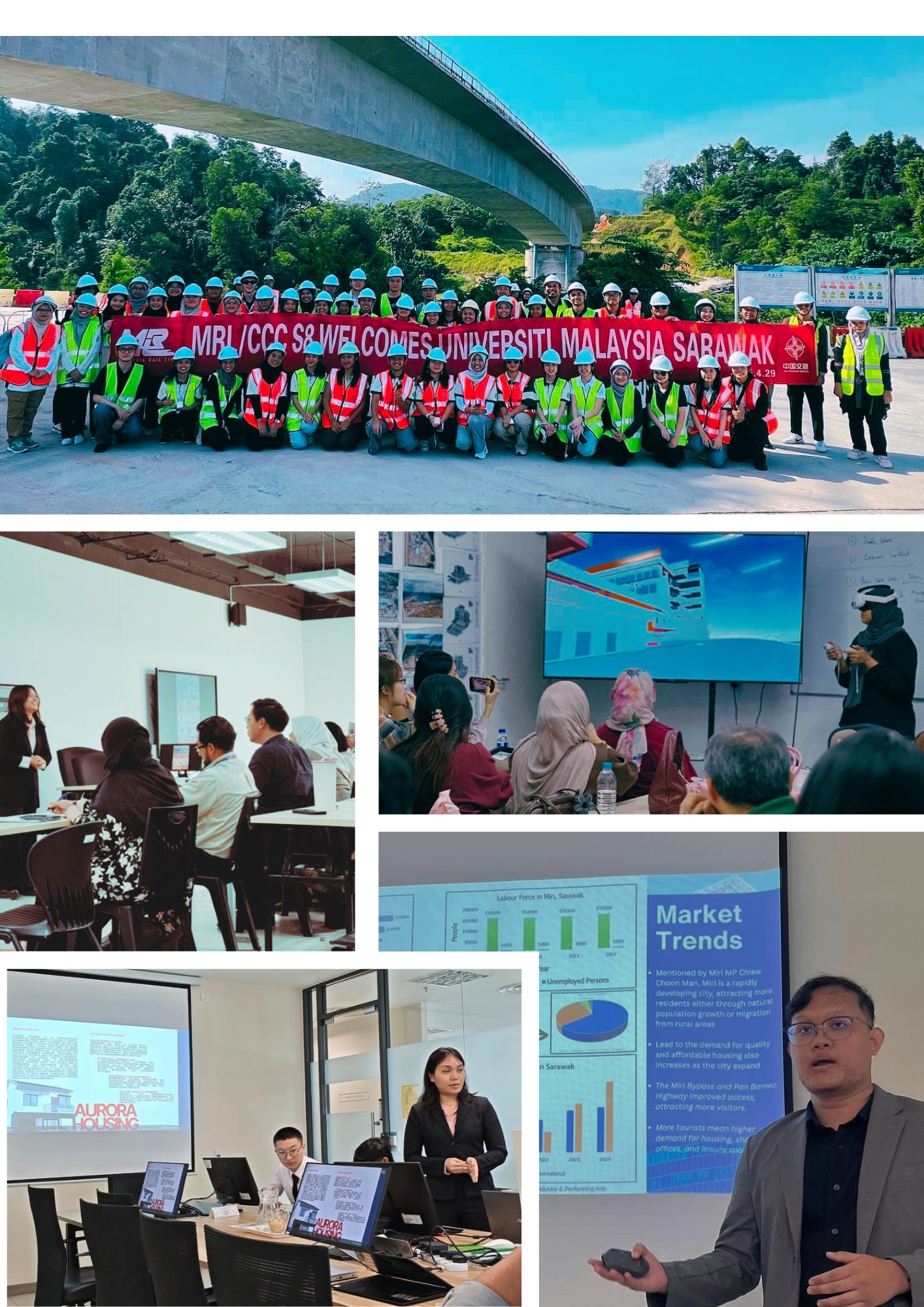
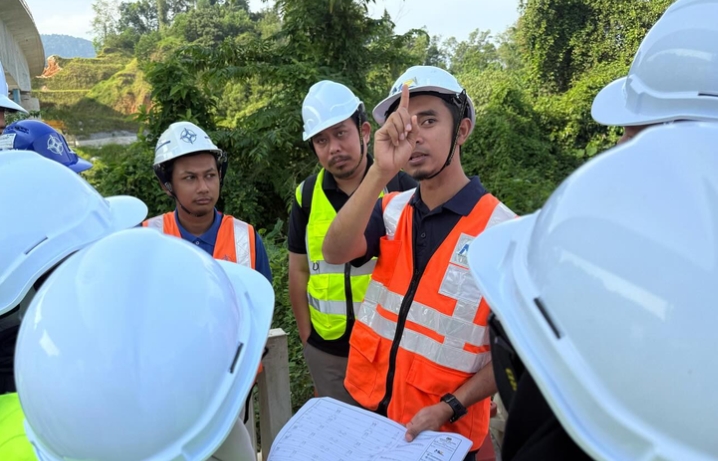
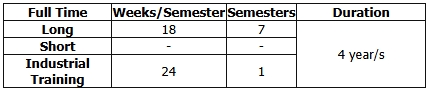
The programme is structured over a period of four years. Its mode of delivery is best described as an integrated, all-in-one approach that combines various teaching and learning methods. These include lectures, studio-based learning, peer learning, and student-centred activities, as well as presentations such as Final Year Projects (FYP) and Integrated Design Projects (IDP), research components, site visits, and industrial training.
One key mode of delivery is industrial training, where students spend the entire duration of the 7th semester in their final year undergoing practical training in the industry. During this period, students are placed in relevant organisations to gain hands-on experience, exposure to real project environments, and professional skills in cost management, contract administration, and construction practices.
What is Quantity Surveying?
Quantity Surveying (QS) is a professional discipline within the construction industry that focuses on the cost, financial and contractual management of development projects. Quantity Surveyors ensure that projects are delivered efficiently, cost-effectively and within budget from inception to completion.
Their responsibilities include cost estimation, preparation of Bills of Quantities (BQ), procurement and contract advice, life-cycle costing, financial reporting, interim payment certification, final account reconciliation, and the management of construction claims and disputes. By evaluating project costs and risks, Quantity Surveyors help clients and project teams make informed decisions while maximising value and quality.
Working closely with consultants, contractors, developers and clients, Quantity Surveyors play a vital role in maintaining the financial viability of construction projects. Combining technical knowledge, commercial awareness and analytical skills, the profession offers a rewarding career pathway in shaping the built environment.
About the Programme
Learning Quantity Surveying
The studio component focuses on measurement skills, which form the foundation of quantity surveying. Students are trained to quantify construction works accurately from drawings and specifications. This hands-on approach allows them to develop competency in preparing Bills of Quantities (BQ) and understanding standard methods of measurement. Studio sessions are interactive and practice-oriented, encouraging students to apply what they have learnt in real-world scenarios.
Career Pathway to become a Profesional Quantity Surveyor
The title “Sr”, pronounced Surveyor, is a professional designation used before the name of a qualified surveyor who is registered with the Royal Institution of Surveyors Malaysia (RISM). It signifies professional competence, industry recognition, and a commitment to upholding the highest standards within the surveying profession. The “Sr” title is recognised across various surveying disciplines, including Quantity Surveying, Geomatics and Land Surveying, Property Surveying, and Building Surveying. As a respected professional credential, it reflects both academic achievement and practical expertise in the built environment sector.
For those pursuing a career in Quantity Surveying, the pathway towards earning the title involves professional registration with the Board of Quantity Surveyors Malaysia (BQSM) and RISM. Candidates begin as provisional members and, upon successfully completing the prescribed professional examinations and assessments, are admitted as Full Members of RISM and become eligible to use the prestigious “Sr” designation.
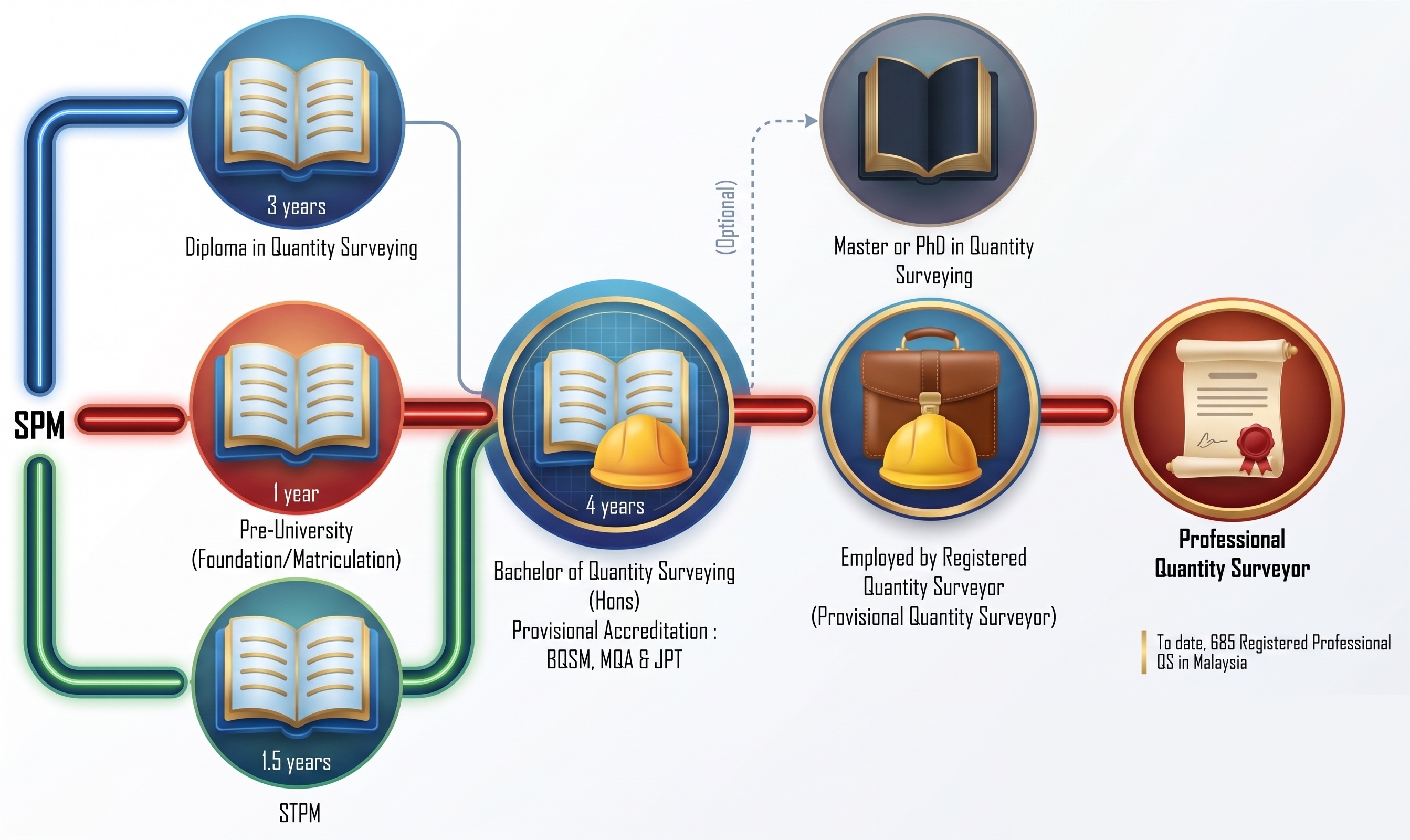
At UNIMAS, the journey towards this rewarding profession begins with the Bachelor in Quantity Surveying with Honours programme. Designed to meet industry needs and professional standards, the programme equips graduates with the technical knowledge, analytical capabilities, and professional foundations required to excel in the field and progress towards becoming a qualified Surveyor.
Courses
QUANTITIES & MEASUREMENT
Introduction to Construction Measurement
Construction Measurement of Architectural Works
Construction Measurement of Structural Works I & II
Construction Measurement of Building Services and External Works
Construction Measurement of Civil Engineering Works
CONSTRUCTION TECHNOLOGY
Construction Technology for Building Works
Construction Technology for Structural Works
Construction Technology for Civil Engineering Works I & II
CONSTRUCTION LAW & CONTRACT
Construction Contract Law and ManagemenT
Law of Tort and Dispute Resolution
INFORMATION TECHNOLOGY & COMPUTER
Digital Technology in Construction
Building Information Management
PROFESSIONAL PRACTICE & PROCEDURES
Pre-Contract Administration
Contract Administration I, II & III
RELATED COURSES
Integrated Multidisciplinary Project and Simulation I & II
Industrial Training
CONSTRUCTION ECONOMICS
Principles of Construction Economics
Economics for Quantity Surveyors I & II
Property Investment and Evaluation
Construction Business
CONSTRUCTION & PROJECT MANAGEMENT
Construction Project Management
Construction Sustainability
BUILDING SERVICES
Building Science
Building Services
ANALYSIS OF PRICES/ COSTING
Construction Estimating I & II
FINAL PROJECT/ DISSERTATION
Research Method for Construction
Final Year Project I & II

"Discover the Quantity Surveying programme at UNIMAS, where technology meets the future of construction. With a strong focus on Building Information Modelling (BIM), digital construction practices and emerging industry technologies, the programme equips graduates with the skills needed for a rapidly transforming built environment. Backed by a strong employability record and close industry engagement, graduates are well-positioned to join the profession at the forefront of major construction and infrastructure developments across Malaysia and the wider region."
Ahmad bin Abdul Hadi
Programme Coordinator
Bachelor in Quantity Surveying with Honours