Postgraduate
Programmes
Facts & Figures
As of August 2026
Programmes
Postgraduate Students
Research Programmes
Doctor of Philosophy
MQA/PA13879*
Master of Science in Built Environment
NEC: 0730 [Architecture, surveying and town planning not further defined]
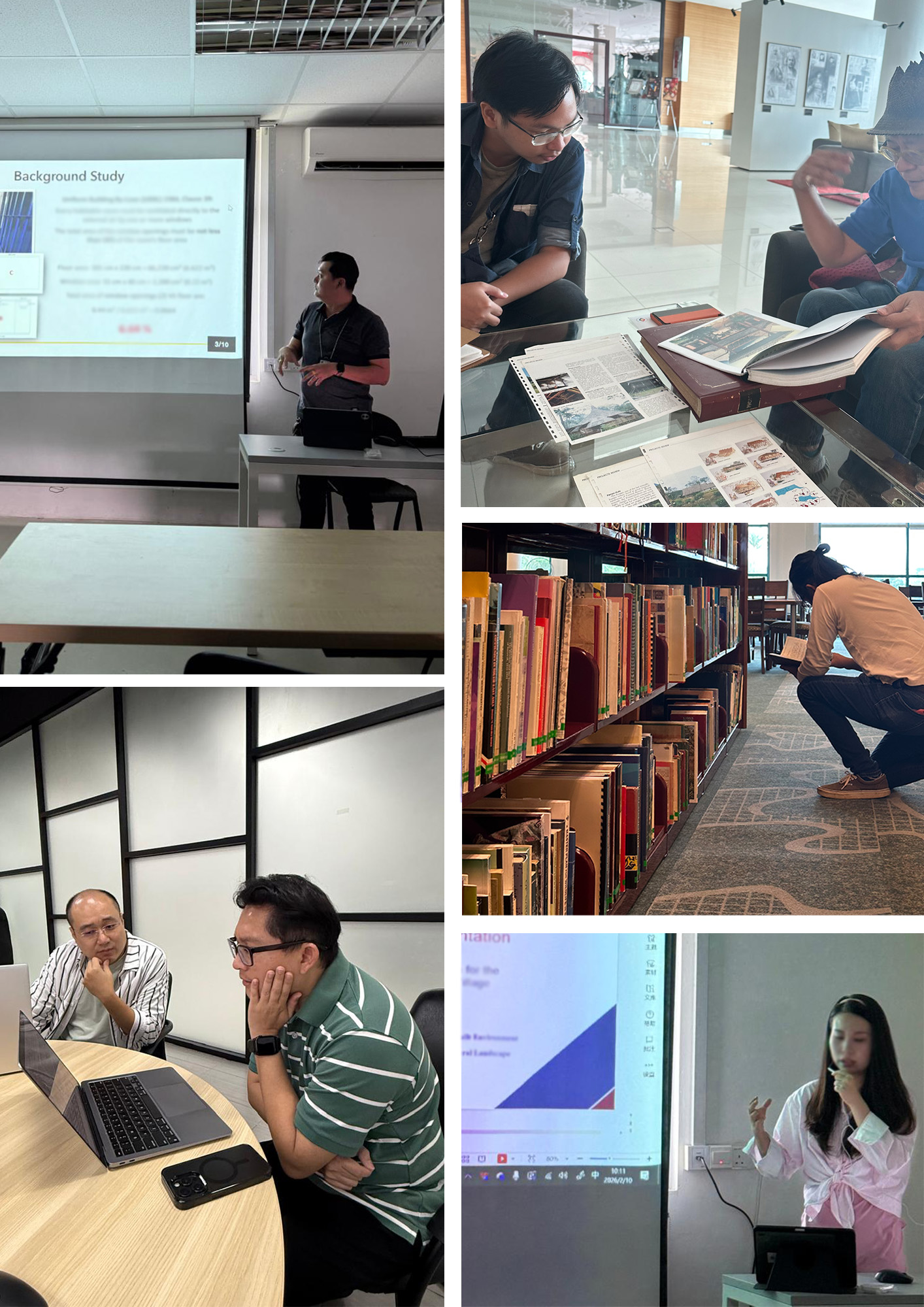
These research programmes are thoughtfully designed to offer graduates a structured and rigorous education in the Built Environment at both Master’s and PhD levels. They provide a dynamic platform that champions innovative, forward-thinking approaches to sustainable design, while encouraging the integration of practical solutions within the field.
Through a strong emphasis on research methodologies, students gain in-depth exposure to the theories underpinning the Built Environment, alongside the professional practices expected by the industry. This ensures that graduates are not only academically equipped but also well-prepared to contribute meaningfully to contemporary challenges in the field.
Fields of Specialisation
- Urban Design
- Urban Culture
- Urban Management
- Urban Conservation
- Architecture History and Theory
- Islamic Architecture
- Vernacular Architecture
- Human Factors in Architecture
- Architecture Design
- Architectural Media
- Digital Architecture
- Digital Conservation
- Park and Recreational Design
- Cultural Landscape
- Rural Planning and Development
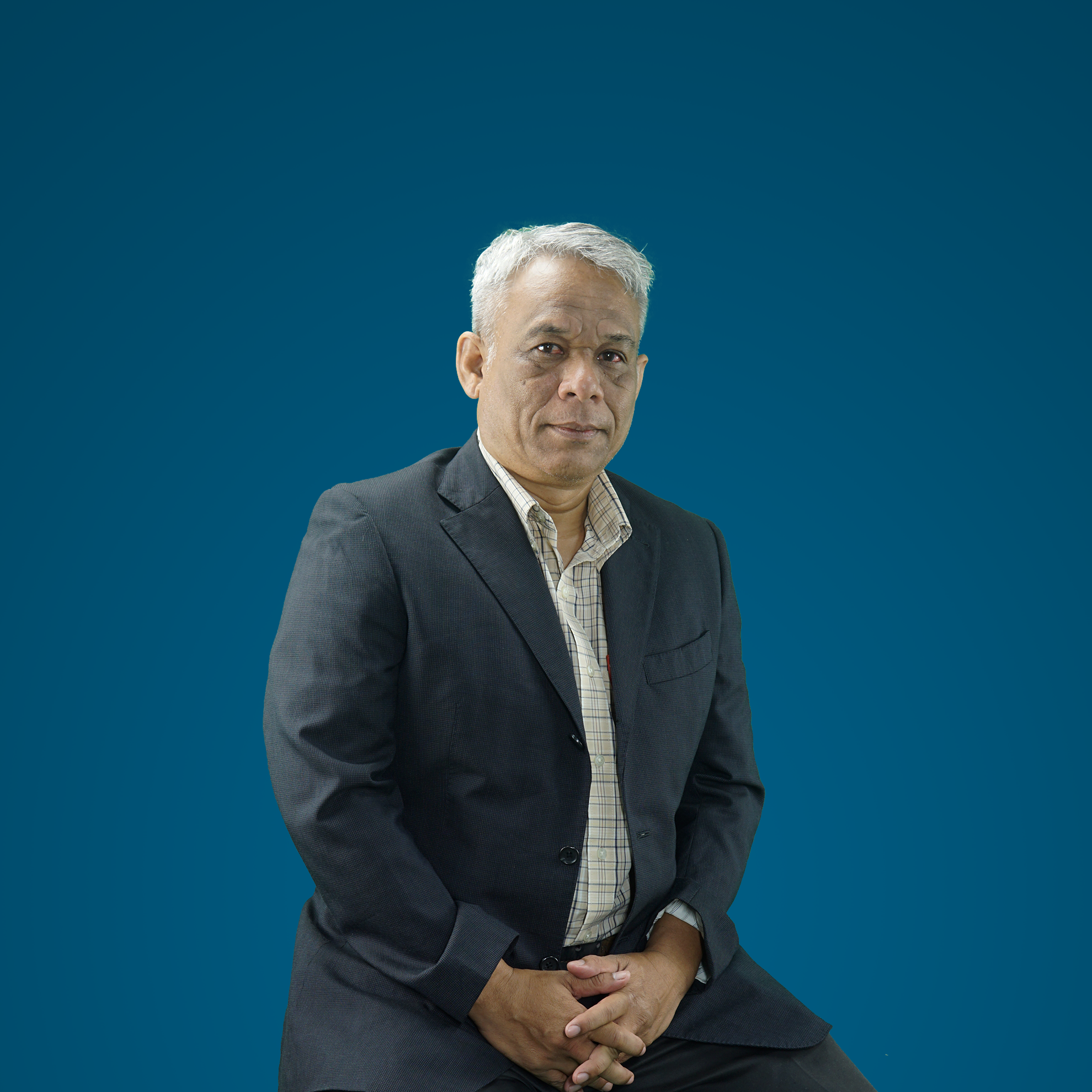
Qualified Main Supervisors
Area of Expertise
Energy Efficient Building, Renewable Energy, Civil Engineering Management

Area of Expertise
Green Building, Building Information Modeling Management, Green Construction and Sustainability, Construction Project Management, Quantity Surveying, Contract Administration, Construction Economics, Construction Measurement and Estimating, Quantity Surveying Education

Area of Expertise
Sustainable Infrastructure, Green Technology and Sustainable Design, Architecture and Building Science, Building Disaster Resiliency, Private and Public Education, Architectural Project and Construction Management, Digital Economy, Construction and Project Management in Quantity Surveying, Sustainable Construction Industry, Construction Industry Governance, Social Responsibilities in Quantity Surveying Practice
Area of Expertise
History and Theory of Architecture, Architecture Heritage and Conservation, Religious Architecture, Landscape Architecture

Area of Expertise
Housing Studies, Property Development, Sustainable Construction, Property Technology & Digital Construction, Infrastructure & Urban Development, Real Asset Management, Property Valuation and Surveying

Area of Expertise
Daylighting in School Design, Urban Theory Design, School Design, Indoor Air Quality

Area of Expertise
European Urban Planning History, Spatial Heritage of Indigenous Settlements

Area of Expertise
Architectural Media & Representations, Digital Architecture, Urban Design (Urban Appraisals/ Legibility Study), Design History

Area of Expertise
Sustainable Homes, Construction Management, Urban Design, Transport Planning

Area of Expertise
Occupational Safety and Health Management in Construction Building Construction
Area of Expertise
Malay Architecture, Heritage Conservation & Preservation, Urban Regeneration through Built Heritage Conservation, Urban Design (Qualitative Aspects)

Area of Expertise
Construction and Project Management, Quantity Surveying, Innovation Adoption and Application, Leadership, Organizational Behaviour, Organizational Change, Quality Management System (ISO 9001)
"The postgraduate research programmes at FBE UNIMAS offer a distinctive and enriching perspective on what graduate-level research can achieve. Drawing on a broad spectrum of expertise, they span the scientific and technological dimensions of the built environment, while also embracing the social sciences and humanities, including areas such as heritage studies. This interdisciplinary strength places FBE among a select group of institutions capable of nurturing graduates with not only specialised knowledge, but also a diverse outlook that extends well beyond regional boundaries. Supported by highly qualified main supervisors and co-supervisors with extensive industry experience, students benefit from a robust academic environment that is both intellectually stimulating and professionally relevant—making it an exceptional choice for advanced study."
Dr Azmah binti Arzmi
Postgraduate (By Research) Coordinator
By Coursework
Master of Architecture
MQA/PA13097*
As Malaysia continues to expand its physical development and urban transformation efforts, the need for highly competent architects has become increasingly important. The architectural profession plays a vital role in shaping sustainable, resilient and culturally responsive environments while supporting the growth of the construction industry and the national economy.
The Master of Architecture (M.Arch) at UNIMAS is a two-year full-time professional postgraduate programme designed to develop the next generation of innovative and responsible architects. Equivalent to the LAM Part II professional qualification*, the programme serves as a progression from LAM Part I studies, including the Bachelor of Science (Hons) in Architecture offered by the Faculty of Built Environment, UNIMAS, while also welcoming graduates from other recognised Part I institutions.
The programme adopts a structured, research-led curriculum centred on advanced architectural design studios. Through the integration of design research, critical inquiry and creative exploration, students are challenged to address complex architectural, environmental and societal issues while developing original design solutions grounded in theory and practice.
A strong emphasis is placed on sustainability, technological innovation and design excellence, ensuring that environmental considerations are seamlessly integrated with technical, scientific and digital knowledge. This holistic approach equips graduates with the professional competencies, leadership qualities and analytical skills required to excel in contemporary architectural practice and contribute meaningfully to the future of the built environment.
*The programme currently holds Provisional Accreditation from the Board of Architects Malaysia (LAM) and is undergoing the process for Full LAM Part II Accreditation
What is the difference between a Bachelor's Degree in Architecture and the Master of Architecture programme?
At UNIMAS, the Master of Architecture programme serves as a continuation of architectural education and is designed to fulfil the requirements equivalent to LAM Part II. While the Bachelor's degree provides students with the fundamental knowledge, technical competencies, and design skills required for entry-level practice in the architectural profession, the Master's degree stage advances students beyond the foundational level by engaging them in more sophisticated and critical investigations of architecture.
The curriculum places greater emphasis on the exploration of complex design challenges, including broader social, cultural, environmental, and urban contexts. Students are expected to address projects with increased levels of building complexity, technological integration, and larger scales of intervention. The programme also encourages deeper critical thinking, independent research, and a stronger design inquiry befitting graduate-level study.
Upon successful completion of the Master of Architecture and with the attainment of LAM Part II accreditation, graduates are recognised as Graduate Architects. This qualification enables them to pursue the necessary professional training and eventually sit for LAM Part III, the final professional examination required to become a Registered Professional Architect in Malaysia.
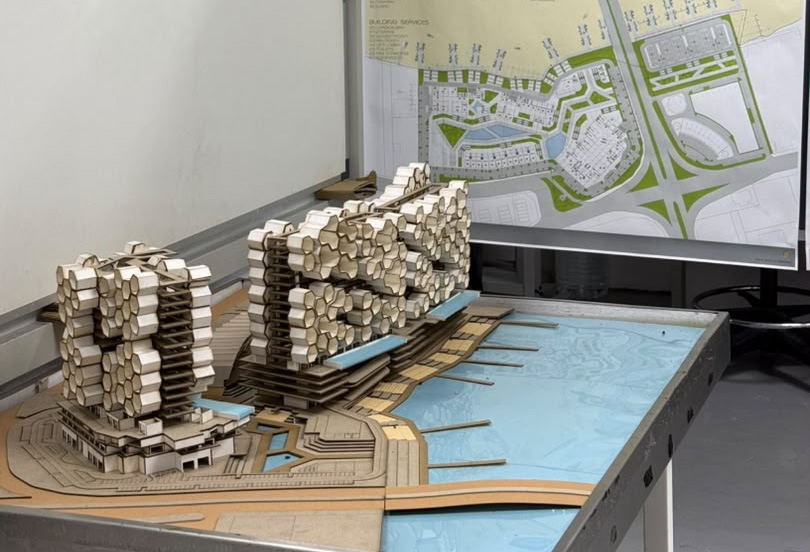
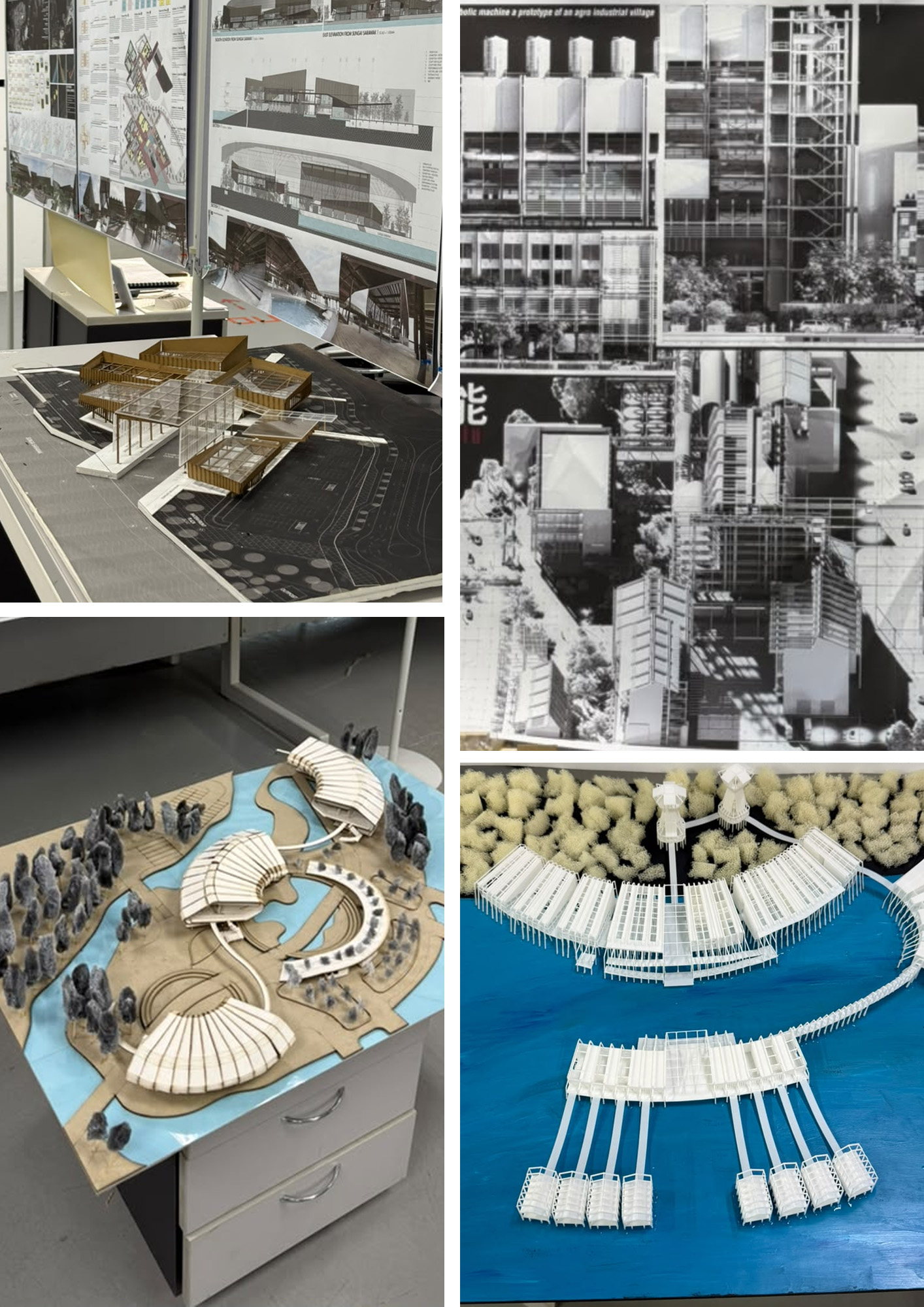
Designed by Chung Chong Yu, Cohort 3.
About the Programme
Philosophy
Architecture as an integrative discipline drawing upon technical, social, and economic knowledge to transform the way humanity inhabits the earth in the creation of a pleasing and sustainable built environment in which to dwell.
Vision
To set forth an Architecture programme at UNIMAS that draws upon the special material, cultural and ecological circumstances of our locality to pioneer holistic approaches to the built environment. Faced with global issues of climate change, habitat and species loss, urban poverty and rural transformation, architecture needs to embrace a sustainability that is informed by indigeneity of people, culture and land to create a lasting, flourishing built environment that is global in outlook and uniquely Sarawakian in practice.
Mission
To produce versatile and responsible graduates with honest, ethical and creative minds in promoting Architecture for humanity and the advancement of knowledge.
Programme Delivery
Within the studio, students engage in problem-based design projects that challenge them to develop architectural solutions and communicate their ideas through evidence-based outputs such as drawings, models, and other design representations. Studio learning encompasses a wide range of activities, including lectures, site analyses, guest talks, discussions, critique sessions, portfolio reviews, exhibitions, field-based learning experiences, and presentations. The outcomes of studio work may take various forms, such as presentation boards, animations, physical and digital models, reports, sketches, renderings, and other design documentation that demonstrate the students’ learning and creative development.
Career Pathway to become a Profesional Architect
The title “Ar.”, pronounced Architect, is a prestigious professional designation used before the name of a registered architect. It signifies that the holder has fulfilled the academic, practical and professional requirements necessary to practise architecture and is recognised by the Board of Architects Malaysia (Lembaga Arkitek Malaysia, LAM).
Attaining the title requires completion of a rigorous educational and professional pathway established by LAM. This journey includes obtaining qualifications from accredited LAM Part I and LAM Part II programmes, followed by the successful completion of the LAM Part III Professional Examination, which assesses professional competence and readiness for practice.
As the title “Architect” is protected under the Architects Act 1967, only individuals registered with Lembaga Arkitek Malaysia are legally entitled to use it. This ensures that the profession maintains the highest standards of competency, ethics and public responsibility.
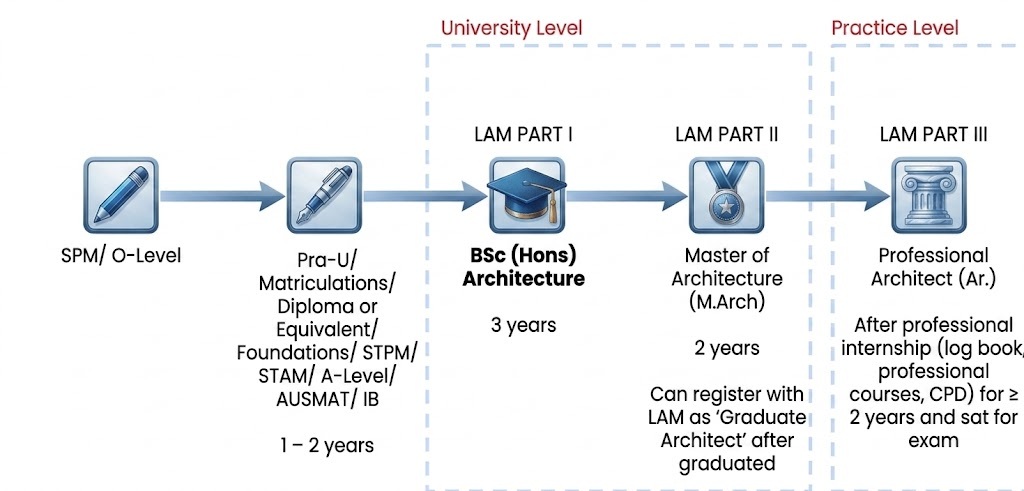
At UNIMAS, the pathway towards professional architectural registration continues through the Master of Architecture programme, which is pending accreditation of LAM Part II by the Board of Architects Malaysia (LAM).
Courses
DESIGN
Architecture Design Studio 7 - 10
COMMUNICATION
Research Methodology
Dissertation 1 & 2
CULTURAL CONTEXT
Global Architecture
Architecture Critics
MANAGEMENT PRACTICE & LAW
Architecture Business
Architectural Conservation
TECHNOLOGY & ENVIRONMENT
Building Technology 4
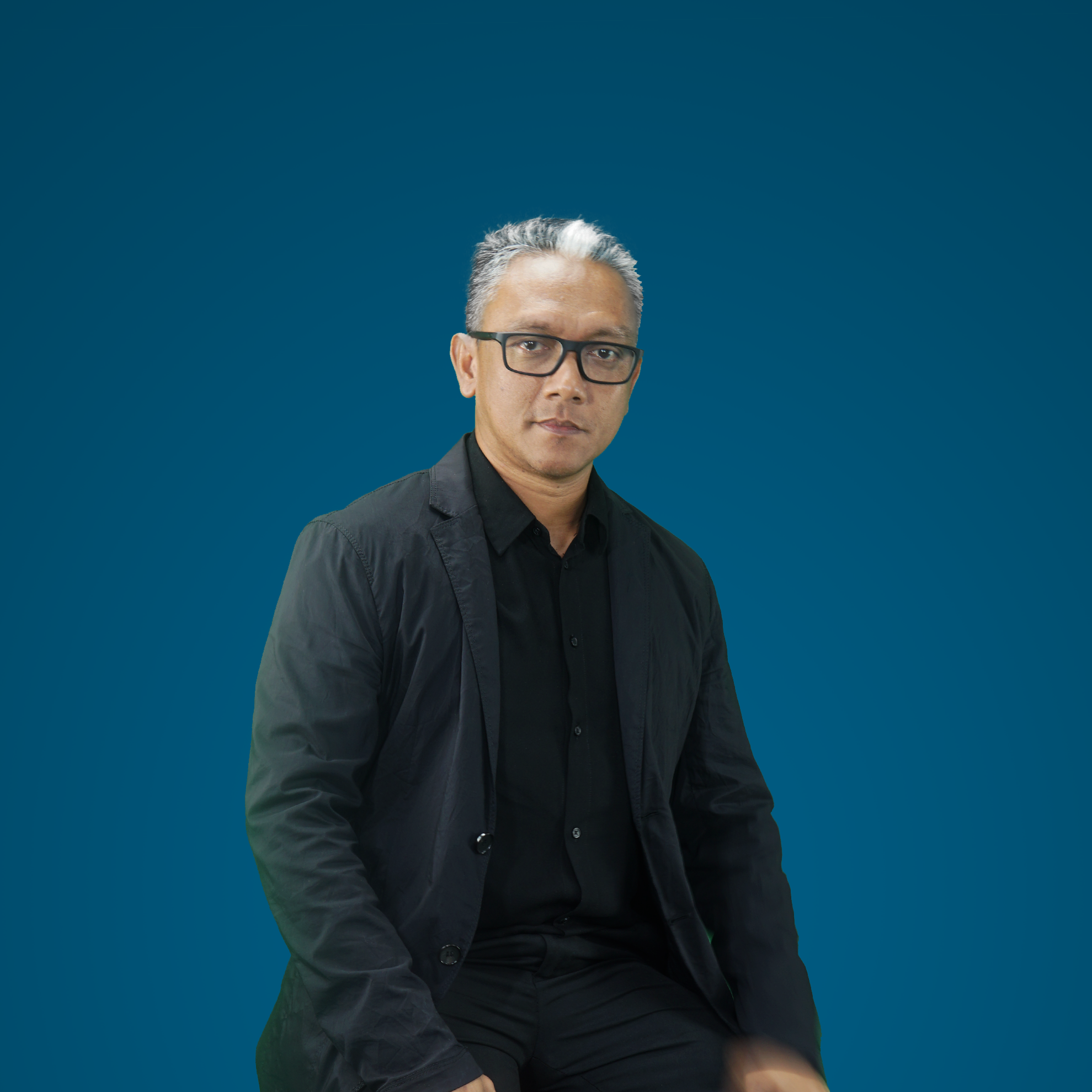
"The Master of Architecture programme at UNIMAS provides a clear and purposeful pathway towards becoming a professional architect. The programme benefits from a distinctive setting that offers a compelling blend of urban and peri-urban contexts for study. This unique environment enriches learning through diverse and relevant case studies, while the programme’s strong integration with industry experts and community engagement further enhances its pedagogical approach. By balancing academic rigour with practical relevance, the programme maintains the intellectual depth expected at postgraduate level while ensuring graduates are well-prepared for the demands of professional practice. This synergy between theory and practice stands as a key strength in shaping capable, industry-ready architects."
Ar Awang Hasim bin Awang Sulong
Programme Coordinator
Master of Architecture
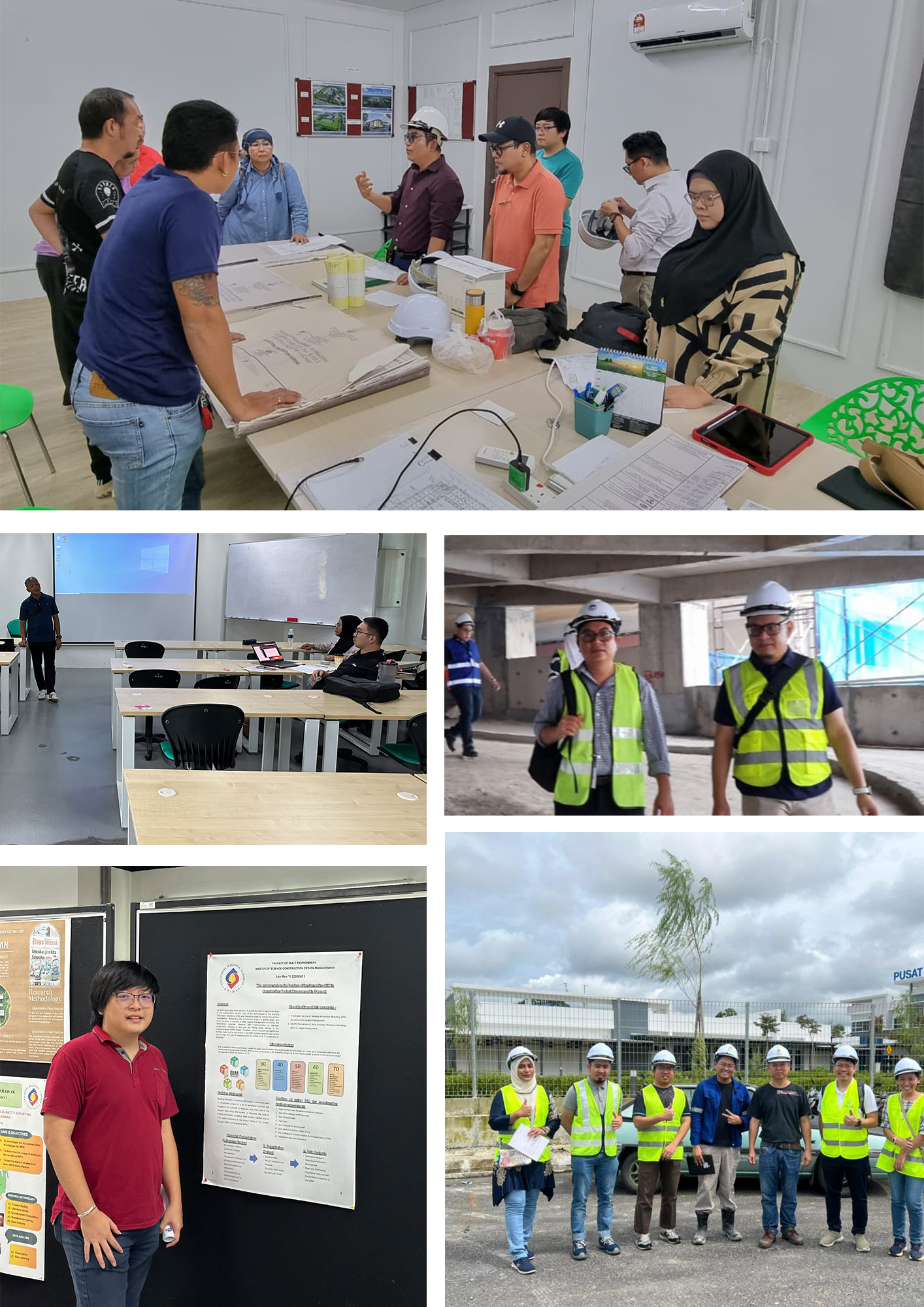
Master of Science Construction Design Management
This programme, accredited by the Malaysian Qualifications Agency (MQA) since 2024, has been carefully designed to equip students with advanced knowledge in design and construction management. It offers a comprehensive learning experience that blends cutting-edge technological and innovative developments with essential technical skills in built environment practice.
Students are guided to develop strong communication skills, enabling effective engagement with construction stakeholders as well as the wider community. At the same time, the programme fosters leadership, professionalism and ethical awareness—qualities that are indispensable in contemporary practice.
Recognising the rapidly evolving nature of the industry, the programme also places great emphasis on lifelong learning and active participation in research, ensuring graduates remain adaptable and forward-thinking in the face of ongoing technological change.
The Master of Science in Construction Design Management programme achieved a significant milestone with the award of Full Accreditation by the Malaysian Qualifications Agency (MQA), effective 12 January 2024. This recognition affirms the programme’s academic quality, industry relevance, and compliance with national higher education standards. It reflects the Faculty’s commitment to advancing postgraduate education and producing professionals equipped to lead innovation, sustainability, and excellence within the construction and built environment sectors.
The programme is designed to develop graduates with advanced expertise in construction design management, combining technical knowledge, critical thinking, leadership, research capabilities, and professional practice. Emphasis is placed on sustainable development, digital technologies, effective communication, entrepreneurship, and ethical decision-making, enabling graduates to manage complex projects, lead multidisciplinary teams, and contribute meaningfully to the transformation of the construction industry. Through this accredited programme, the Faculty continues to strengthen its role in nurturing future leaders who will help shape resilient, sustainable, and innovative built environments for generations to come.
About the Programme
Maximise advanced technical knowledge and critical problem solving skills.
Integrate functional work skills towards industry leadership
Establish themselves as successful entrepreneurs in the industry
Uphold professionalism and ethics for benefit of society and nation at large
"What sets this programme apart is its commitment to relevance and innovation. It not only addresses foundational and generic aspects of construction design management, but also equips students with cutting-edge insights aligned with current industry demands. With a strong emphasis on interdisciplinary learning, students gain the ability to navigate design coordination, project integration and collaborative problem-solving across diverse professional contexts. The programme is further strengthened by experienced academic staff and industry practitioners, ensuring a balance between theoretical rigour and practical application. Students benefit from exposure to real-world challenges, emerging digital tools, and sustainable approaches, preparing them to lead in a rapidly evolving built environment."
Dr Noorhayatie binti Yusof
Programme Coordinator
MSc in Construction Design Management